
MindCrop-X
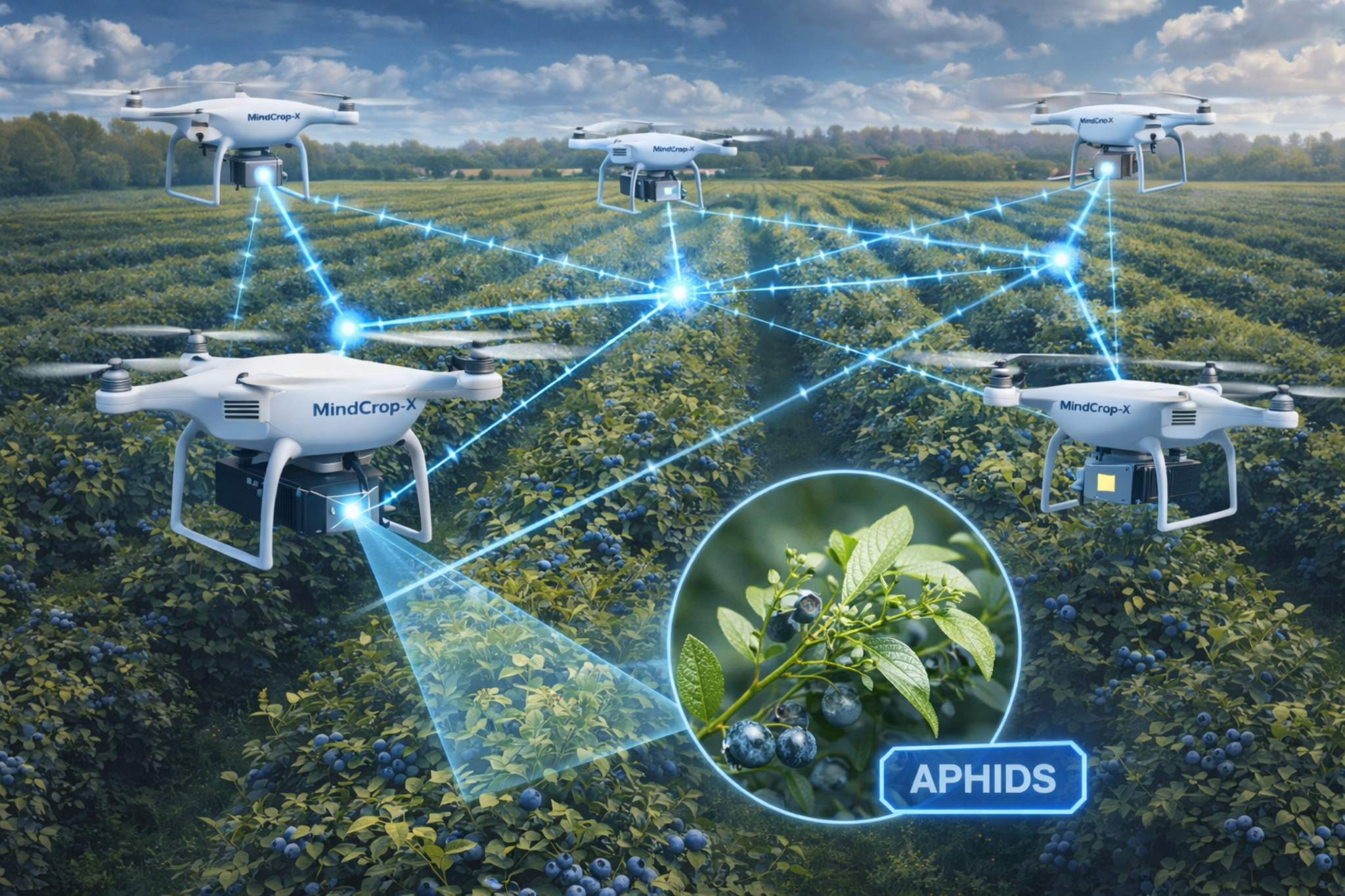
MindCrop-X is a low-power, edge-native autonomy stack for agricultural drones. It is designed to keep perception, anomaly confirmation, tracking, and coordination closer to the field so operators can act on evidence faster instead of waiting on cloud-dependent review loops.
Mission
Turn drones into real-time decision tools for growers, crop advisors, and field operators. The platform targets crop scouting, pest and disease monitoring, irrigation troubleshooting, and coordinated multi-drone coverage.
Why the platform matters
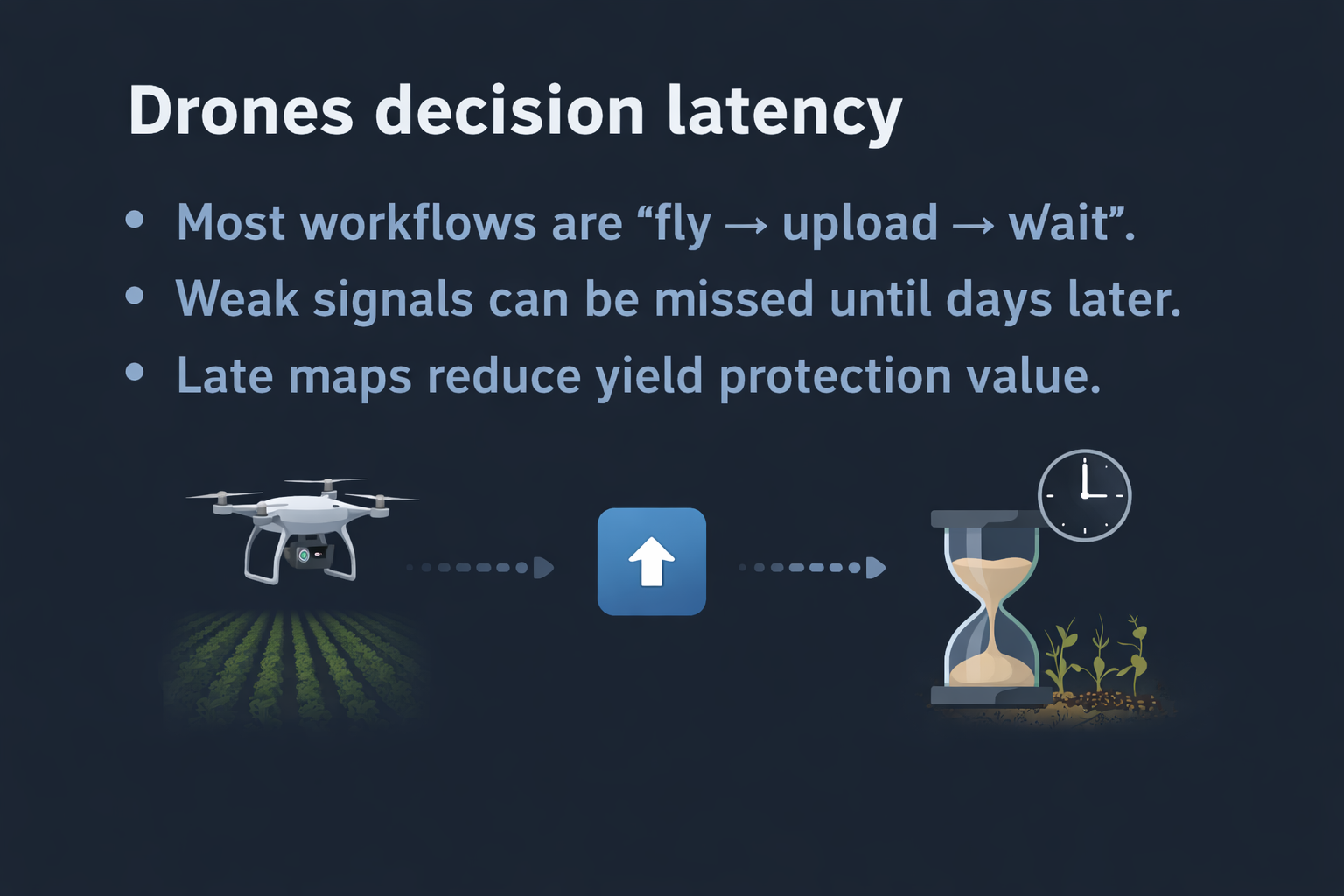
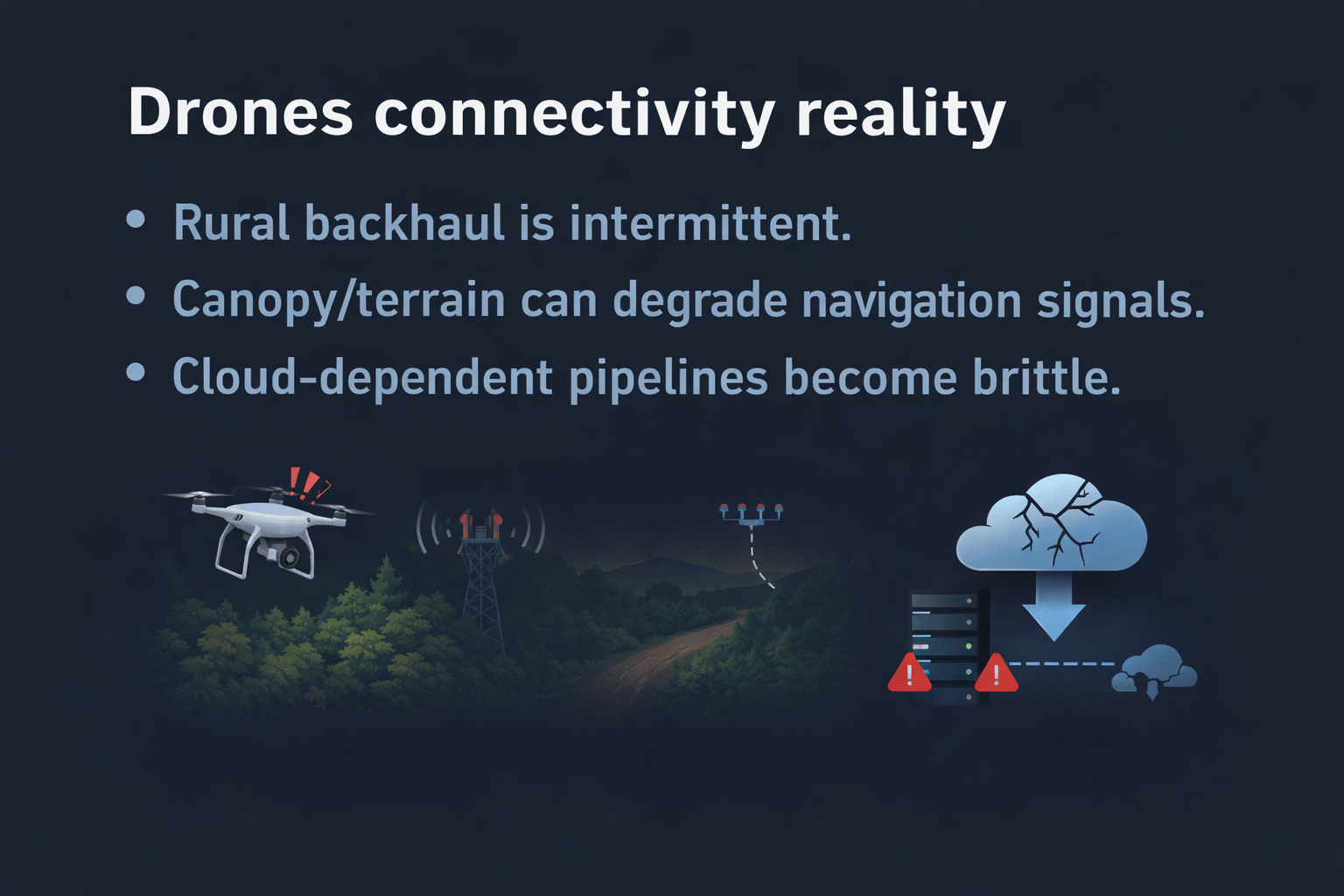
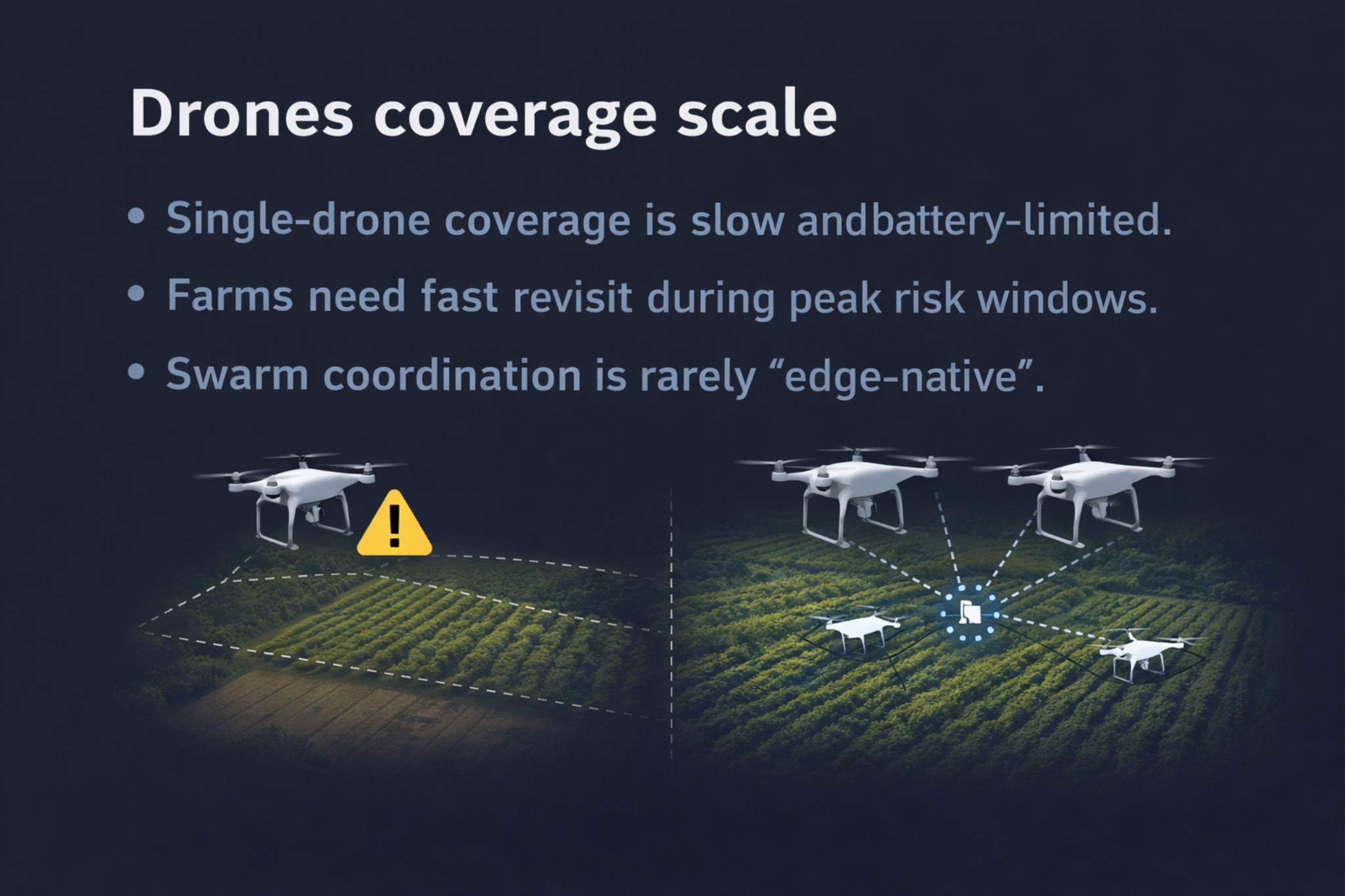
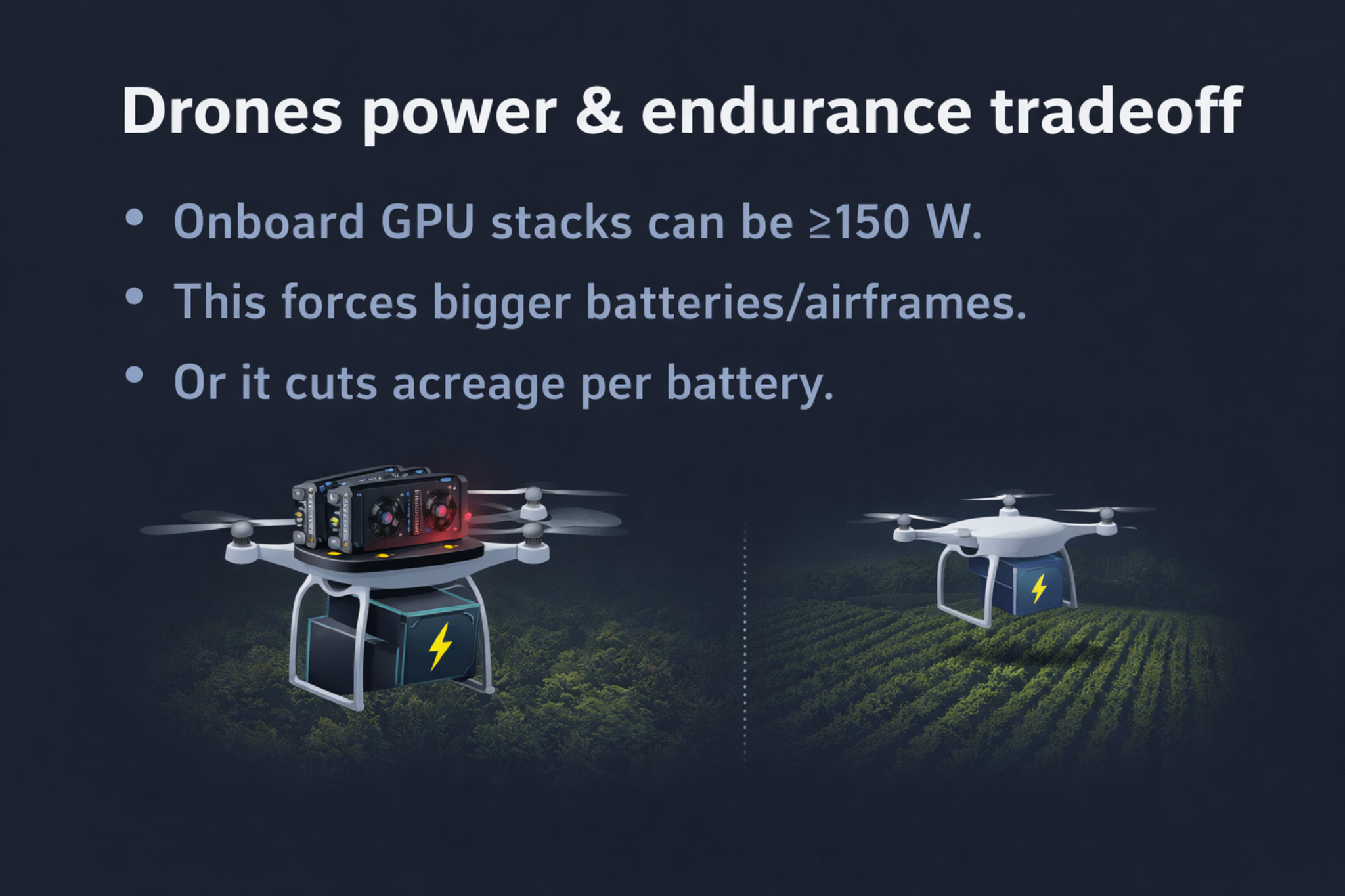
Attached materials consistently point to four operational constraints that MindCrop-X is meant to address.
Core platform capabilities
The product concept combines low-power autonomy, evidence generation, and cooperative field coverage.
Onboard inspect-on-detect
Detection can trigger slow, hover, orbit, or targeted re-scan behaviors to confirm anomalies while the drone is still on mission.
Field-ready outputs
Hotspot tiles, geo-thumbnails, evidence clips, confidence scores, and operator-ready checklists are part of the output concept.
Swarm coordination
Adaptive mesh coordination helps share hotspot tiles, reduce redundant coverage, and continue operation during degraded communications.
Low-power compute envelope
The stack is positioned around roughly a 25 W compute target rather than relying on continuous GPU-class onboard loads.
Telemetry cueing
Field telemetry such as irrigation, moisture, or station data can be used to prioritize where the system should inspect first.
Safety-first workflow design
The intervention concept is framed around observe, cue, and inhibit outputs, keeping physical control decisions separate from autonomy recommendations.
Technology direction
Attached notes describe MindCrop-X as a neuromorphic edge AI platform direction using event-driven perception and SNN-based blocks for efficient response. Referenced modules include event-based vision, RF fusion and clutter suppression, SNN-assisted tracking, and energy-aware control loops.
The practical objective is low-latency sensing and action in a low-SWaP package that supports lightweight aerial data collection while staying usable under real field constraints.
Representative roadmap
The attached NJEDA executive summary describes a staged development sequence.
Define HIL and field metrics, acceptance criteria, and pilot test structure.
Build sensor ingestion, telemetry cueing, event-driven encoding, and anomaly detection outputs.
Implement tracking and inspect-on-detect behaviors such as slow, hover, or revisit for confirmation.
Add cooperative field coverage, hotspot tile sharing, and deferred upload modes.
Validate in field pilots and package training, operator guidance, and extension-ready materials.
Endurance impact snapshot
Attached comparison material shows how a lower compute envelope can preserve more flight time than a classical GPU-heavy onboard stack.
| Representative platform | Baseline flight time | MindCrop-X endurance reduction | MindCrop-X implied new flight time | Classical GPU ISR endurance reduction | Classical GPU ISR implied new flight time |
|---|---|---|---|---|---|
| DJI Mavic 3 Multispectral | 43 min | 17.8% | 35.3 min | 58.3% | 17.9 min |
| WingtraOne Gen II | 59 min | 10.4% | 52.9 min | 42.7% | 33.8 min |
| AgEagle eBee X | 90 min | 31.9% | 61.3 min | 75.1% | 22.4 min |
| DJI Matrice 350 RTK | 55 min | 3.9% | 52.9 min | 20.7% | 43.6 min |
The key design takeaway from the attached comparison is that a continuous 23.3 W load has very different impact depending on the baseline aircraft power. Efficient endurance platforms are much more sensitive, while heavy-lift multirotors absorb the same compute load more easily. This is why MindCrop-X positions efficient, event-driven autonomy as a product requirement rather than an optimization afterthought.
Target users and channels
The attached executive summary points to growers, crop advisors, drone service providers, UAS integrators, and irrigation operators as the main target customer set. Channel paths include direct pilots, integrator partnerships, ag retail partnerships, and university or extension-led demonstration programs.
Near-term use cases
Crop health monitoring, disease and pest detection, irrigation priority mapping, multi-drone scouting, and evidence-led treatment workflows are the most immediate use cases described in the attached materials.